Facing the Past to Liberate the Future
Despite the enormous sacrifices of millions of Black and Brown soldiers who died serving colonial powers; their contributions are frequently ignored or minimized in official narratives of war and remembrance. WCM is committed to address this issue.
- About
- museum
- get involve
Remembering The Contributions of Millions of Colonial Troops in The World Wars
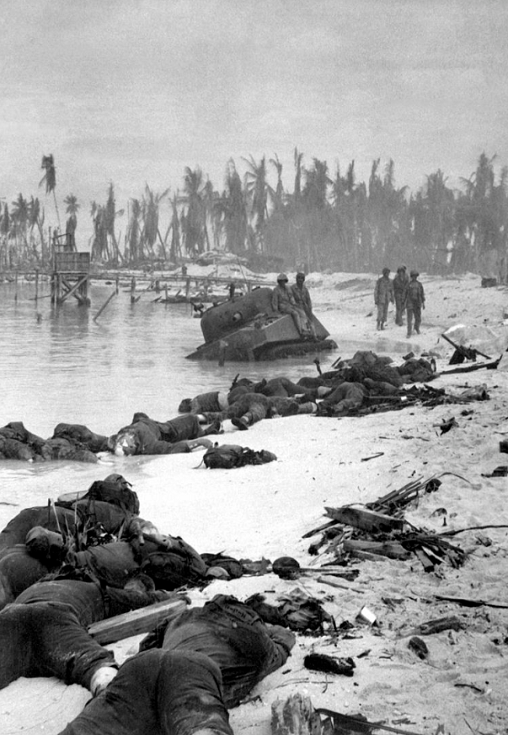
The First and Second World War has a deep impact throughout world. Whilst opposing colonial powers drew labor and resources from vast areas of the globe, and fought to expand their imperial domains, the Empires of all the major imperial powers became battlegrounds for territory and resources. Millions of colonial forces were drawn from around the world into the conflagration of the war.
Despite being under colonial rule themselves, the forces that dotted the battle maps of the World Wars were
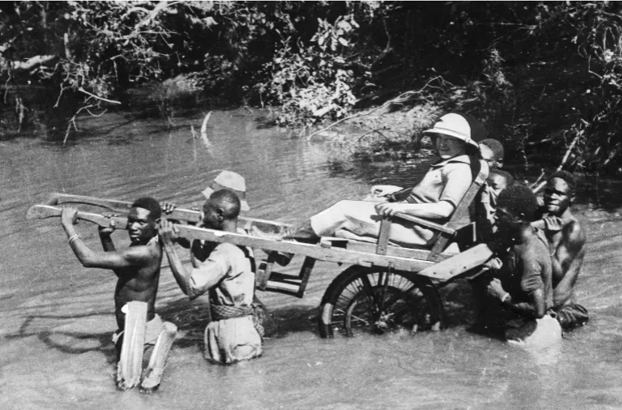
crucial for colonial powers to fill out their ranks and keep up their momentum. From the racist regimes imposed across North Africa to the Bengal Famine in India, coupled with the fact that Black soldiers were allocated some of the most dangerous roles such as loading ammunition, laying telephone wires and
digging trenches, the human consequences were disastrous.
Those who were not deemed fit for fighting because of the color of their skin were often delegated roles
in ‘carrying corpses’, where they were used as laborers and ‘beasts of burden’, with death rates as high as twenty percent. In 1917, over 600 black Africans from the South African Native Labor Contingent were killed by the Germans, and over 100,000 African soldiers died in East Africa from disease, exhaustion and
enemy action. Although it is difficult to pinpoint exact numbers due to the complex nature of colonial forces and incomplete records, millions of colonial soldiers died during the World Wars to defend Western democratic freedoms and way of life. Despite the enormous sacrifices of millions of Black and Brown soldiers who died serving colonial powers; their contributions are frequently ignored or minimized in official narratives of war and remembrance.
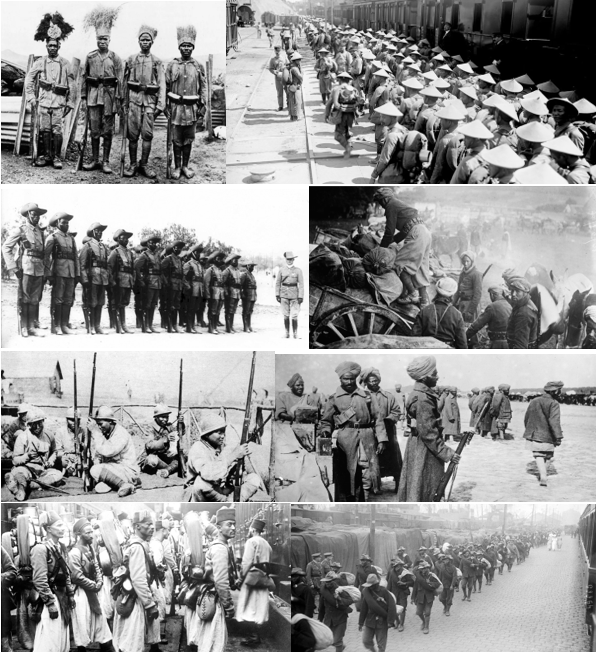
Millions of colonial forces were drawn from around the world into the conflagration of the war.
‘Remembrance Day’ is a time for reflection on the full human cost of the World Wars, and the many colonial conflicts of the Inter- and Post-War periods, however the history of colonization continues to shape who is commemorated on Remembrance Day and how.
Every year, victims of colonial wars are rarely, if ever, mentioned at mainstream remembrance occasions. The uncritical portrayal of war and militarism at these events glosses over the history and violence of colonization and highlights a significant historical oversight and a form of systemic racism.
WCM believes that Remembrance Day should be about remembering all victims of war, both civilian and military, of all nationalities – including those whose histories are being systematically
erased.
THE FORGOTTEN WOMEN OF COLONIAL WARS
There is little research into the resulting lives of the women and children who were left behind in African and Asian villages, having lost their husbands, brothers or fathers. While we have well-documented stories of European women’s mobilization for the wars, the stories of women living in the colonies are pretty much non-existent, even though many of them played a significant role in the war, from being camp followers and laborers to spies and snipers. These women continue to be erased from history. The history of colonization is inseparable from the history of the World Wars. WCM is committed to remember all victims of colonial wars.
Decolonizing Remembrance
Unequal commemoration:
While soldiers from the colonizing nations are widely remembered, colonial troops often lack proper memorials, headstones, or recognition for their service, even when they died in large numbers.
Colonial power dynamics:
This lack of remembrance is often attributed to the power dynamics of colonialism, where the experiences of colonized populations were deliberately marginalized and downplayed.
A report by the Commonwealth War Graves Commission revealed that hundreds of thousands of non-white British soldiers from Africa, Asia, and the Caribbean were not properly commemorated, highlighting the systemic inequalities in remembrance practices.
Recent efforts to address the issue:
In recent years, there has been a growing movement to “decolonize remembrance” by actively acknowledging the contributions of colonial soldiers and the complexities of colonial wars in
official narratives. WCM was created to give an unmatched impetus to that effort.
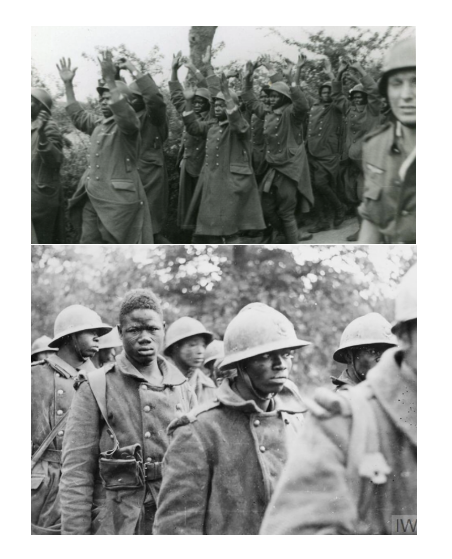
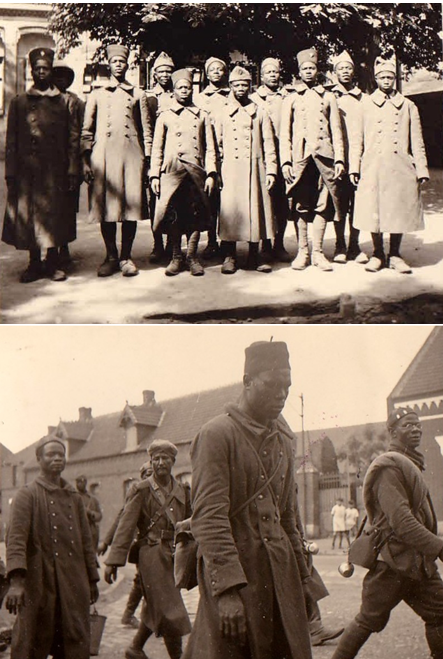
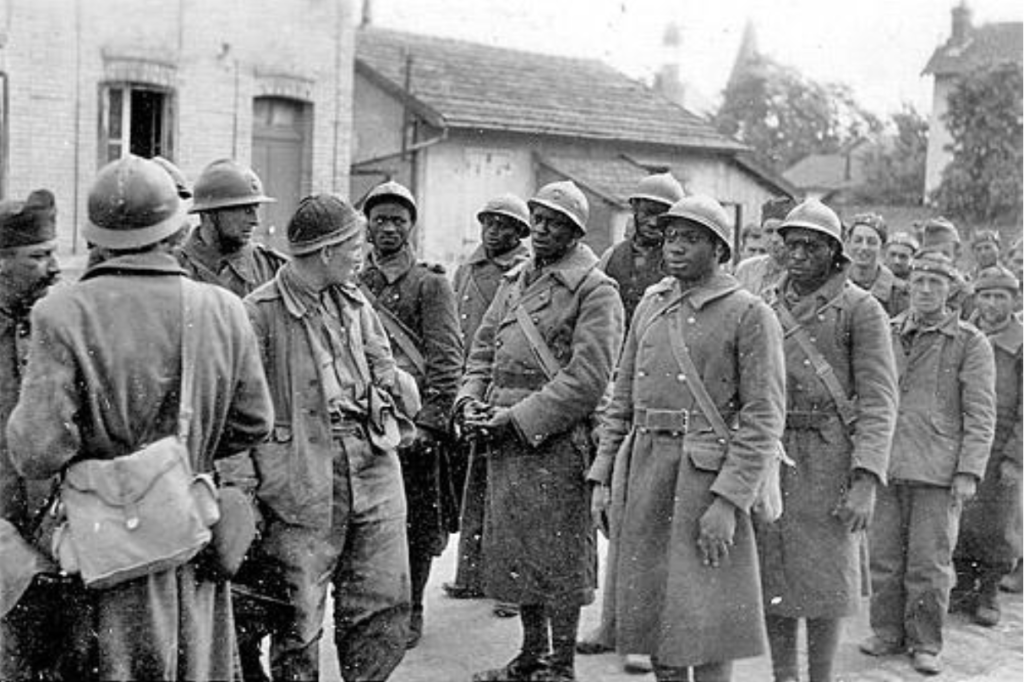
As France crumbled under the Nazi invasion in June
1940, the German army engaged in a series of
massacres against African soldiers in the Lyon
region, in the southeast of the country.
WORLD COLONIZATION MEMORIAL MUSEUM
Mission
World Colonization Memorial Museum’s mission is to restore and make visible suppressed, destroyed, or underrepresented histories of colonization worldwide. It will provide a comprehensive compilation of world history, focusing on the legacy of colonization.
A reflection space honoring those who have worked to challenge colonization around the globe
World Colonization Memorial Museum (WCMM) will provide an in-depth examination of colonization, covering topics such as the Age of Discovery and Exploration, the conquest and subjugation of Africa, the Americas, the Middle East, Asia, and the brutal Transatlantic Slave Trade and its impact. The museum will also address the various genocidal wars that occurred during the decolonization process. Through films, images, and first-person narratives, visitors will experience detailed and compelling interactive content.
WCMM will provide an immersive experience, featuring cutting-edge technology, world-class art, and crucial scholarship to explore the dark aspects of world history.
Alongside the world’s first and only international memorial dedicated to the victims of colonization, the museum presents a unique opportunity for visitors to confront challenging aspects of our past.
Colonization in the Americas, Africa, Asia, the Middle East, and Europe will feature five interconnected wings in the Museum, showcasing hundreds of sculptures and original animated short films narrated by award-winning artists worldwide.
A dedicated wing of the museum will examine the economics of colonization, the role of the League of Nations, and later the United Nations Trusteeship Council, in the violent enslavement of Indigenous peoples in Trust Territories. It will address issues such as sexual violence against women and children in the colonies, the commodification of people, and the desperate efforts made by colonized individuals to achieve independence.
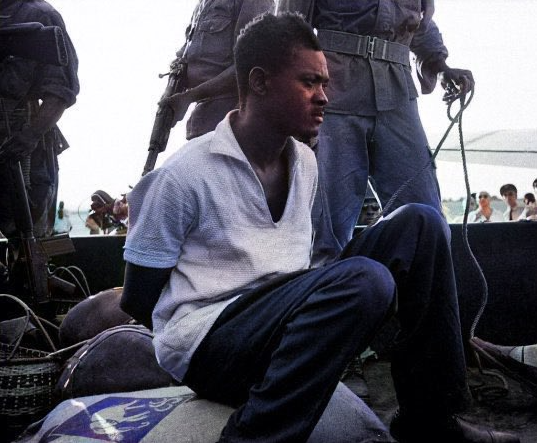
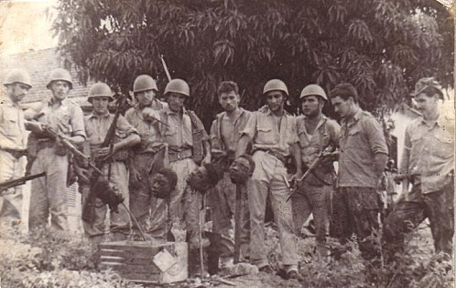
An extensive exhibit on the brutal assassinations of prominent pro-independence leaders worldwide will document a detailed timeline, short films, and first-person narrative accounts.
The museum’s extensive content on various wars of independence will be located in a wing that explores the role of media during the era of racial terror resulting from colonization.
The final words of war victims will highlight the suffering caused by colonization, affecting entire communities. Details about the starvation of children will help visitors grasp the extent of terror and violence endured by many families.
Visitors will hear firsthand accounts from the descendants of murdered pro-independence leaders and those who lost family members during some of the most devastating wars for independence. They will also learn about the courageous efforts to challenge colonization led by legendary decolonization activists. This includes figures such as Mohandas Karamchand Gandhi, an Indian lawyer and anti-colonial nationalist known for his nonviolent resistance in the successful campaign for India’s independence from British rule, ,,, and Kwame Nkrumah, the father of modern Pan-Africanism (not exclusively).
WCMM will emphasize courageous decolonization movements that challenged colonization and forced colonial powers to respond. This includes the Wars of Scottish Independence, the American Revolutionary War, the Haitian Revolution, the Latin American Wars of Independence, the European Revolutionary Wars of Independence, the Middle East and Asia Revolutionary Wars, and the numerous wars of independence across Africa.
The portrayal of colonization as a widespread manifestation of racism will be compellingly illustrated through a collection of actual signs, artifacts, memorabilia, and notices from across the globe for visitors to see, read, and experience.
Visitors will learn about significant civil wars worldwide and how their origins stem from the way colonial powers established national boundaries, often forcefully merging different religious and ethnic groups.
A discussion on the disenfranchisement of Black soldiers will highlight the Forgotten Colonial Forces of the World Wars, a crucial element in how equal rights were undermined during the colonization era.
The Berlin Conference of 1884 formalized European claims to African territories and established rules for colonization. This was followed by the League of Nations Mandate, which legalized colonization under international law. The United Nations Security Council has also played a role in perpetuating a legalized caste system, which is one of the most significant legacies of colonization. The WCMM will showcase controversial timelines of colonization and outrageous international agreements that have shocked humanity’s conscience.
WCMM will have a Reflection Space that honors hundreds of people who have worked to challenge colonization.
In a grand space featuring world cultures and powerful imagery, the history of struggle will inspire everyone to reflect on how we can make a difference.
The museum will feature a world-class art gallery displaying major works by celebrated artists from around the globe. We will have a gallery that showcases works created exclusively for WCMM. The entire collection will be curated in relation to the museum’s historical narrative.
Collaborations with Western and non-Western world music, including quasi-traditional, traditional, and intercultural forms, will explore the roles and significance of arts, music, and dance in global decolonization efforts.
As a physical location and outreach program, WCMM will serve as a catalyst for education about the legacy of colonization and racial inequality, fostering truth and reconciliation that will lead to genuine solutions for contemporary issues.
Let's Unveil the Ugly Parts of Our History
Something unjust happened around the world that too few people have discussed. WCM acknowledges that, despite the impacts of colonization, the world can still become a better place. However, if we want to move forward, we must speak the truth, recognize the darker aspects of our history, and commit to reconciliation and healing.
Do you or anyone you know speak English, Spanish, French, Dutch, or Portuguese? Are you aware that these languages, which carry culture and embody the beliefs, values, and identity of European nations, were imposed on conquered populations around the world that were disproportionately of color?
Are you aware that, across Africa, the Americas, Asia, and the Middle East, colonization was not just about economic and linguistic imperialism? It was also a global expression of racism—a brutal and nefarious crime that was witnessed and even celebrated by millions of White people.
Do you realize that the United Nations Trusteeship Council, assigned under the UN Charter to supervise and promote the advancement of Trust Territories toward self-independence, was severely undermined by colonial powers? Under its watch, Trust Territories around the world were drenched in the blood of their revolutionary heroes, who were killed under horrific circumstances—including targeted assassinations, extrajudicial executions, massacres, and genocide.
Are you aware that during colonization people of color were reminded that if they tried to resist enslavement, if they try to prevent the partition of their kingdoms, denied their master’s language, or insisted on gaining independence - in other words, if they did anything that upset or complicates White supremacy, White dominance, and political power they will be killed?
Are you conscious that colonization was not just an uncomfortable footnote in history but reflected the belief in racial differences that reinforced Apartheid, Jim Crow Segregation, and systemic racism that has done real psychic damage not just to Black people but to White people too?
Do you believe that the killing of men, women, and children under the banner of colonization was wrong, unjust, and though most people would rather forget, this dark period of racial terrorism in our past casts a shadow across the world and compromises our commitment to reconciliation and healing?
Regardless of direct impact, if you could, would you do something to commemorate colonization victims and help the world recover from centuries of racial injustice?
If you answer yes to one of the above, you are exactly who we seek. You can become a volunteer or an intern by sending us an email: info@wcm-m.org
You can also connect with WCM through our social media platforms below.
Business:
The international business community is embracing corporate responsibility and can work with us to heal racism and make the world a better place. Partnering with WCM to help tackle racial injustice is good for global citizenship and good business.
Don't hesitate to get in touch: info@wcm-m.org
Civil Society:
WCM recognizes the importance of partnering with civil society/non-profits and invites you to join us in building a better, safer, equitable, and more sustainable world.
Please get in touch: info@wcm-m.org
Donate:
Do you want to contribute to the world's first and only colonization memorial?
World Colonization Memorial (EIN 86-3844927) is a 501(c)(3) organization. Gifts and donations are tax-deductible to the full extent allowable under IRS regulations. You can support us by donating via our Donate link above.
Connect With Us
Please connect with WCM through our social media platforms below.